
Large breed
Komondor Puppies
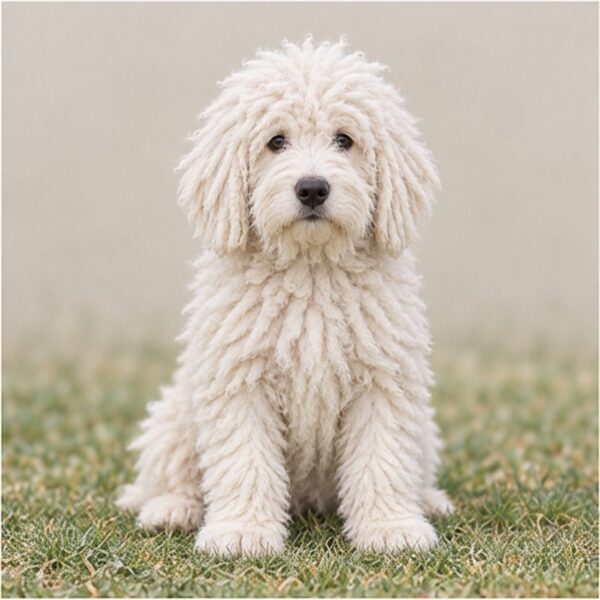
The Hungarian Komondor is a strong and powerful breed of guardian sheepdog draped in chunks of white dread like “cords.” Due to its physical attributes and exceptional instinctive consciousness, the Komondor breed is a natural guardian of livestock and property. Discover more about our Komondor puppies for sale below!
We do not have Komondor puppies on the floor today. Tell us what you are looking for and we will let you know the moment one arrives, or help you find a breed that suits your home just as well.
- Adult weight 80–120 lbs
- Height 25–30 in
- Lifespan 10–12 years
- Exercise 30 min a day
About the Komondor
The Komondor, often recognized for its distinctive corded coat, hails from Hungary, where it has been a loyal guardian of livestock for centuries. This large breed embodies the spirit of a devoted protector and is known for its affectionate nature toward its family. Although they might appear imposing, and their barking tendency is noticeable, under the right circumstances, they can be gentle giants, making them suitable for families, especially those with plenty of space to roam.
Read more about the Komondor Show less
While Komondors are not overly energetic, they do require regular activity to maintain their physical and mental well-being. Daily walks and some playtime in a secure area will suffice to keep this breed happy. They are not ideally suited for apartments due to their size and protective instincts, and they do better in homes where they can feel secure and part of the family dynamics. Notably, they tend to get along quite well with cats, making them a great addition for homes that already have feline friends.
One of the trade-offs of owning a Komondor involves its unique grooming needs. Their striking coat demands professional grooming to keep it in optimal condition, as it can easily become matted without proper attention. Additionally, shedding is significant, so pet owners should be prepared for hair around the home. In terms of training, these dogs might not always come easily, as their independent spirit requires patience and consistency. However, with the right approach, a Komondor can be a loving and loyal companion in your family. If you’re considering welcoming one into your home, Petland Woodlands, TX, might have just the right match for you.
Komondor breed profile
Every score below is set by our team for this breed. Higher is simply more of that trait, not better or worse.
Temperament
-
Affection Very affectionate
-
Playfulness Calm
-
With strangers Wary
-
Territorial Very territorial
-
Prey drive Low
Family & other pets
-
Young children Older kids only
-
Older children With care
-
Other dogs Prefers to be the only dog
-
Cats Usually fine
Energy & exercise
-
Energy Relaxed
-
Mental stimulation Moderate
Training
-
Trainability Takes patience
-
Intelligence Very bright
-
Stubbornness Stubborn
Care & upkeep
-
Shedding Heavy
-
Drooling A drooler
-
Barking Vocal
Home life
-
Apartment living Prefers a house
-
Time alone Most of a day
-
Cold weather Thrives in it
-
Warm weather Needs shade
A good match for
-
First-time owners Some experience helps
-
Senior owners Demanding
-
Running partner Short distances
-
Hiking Good
-
Therapy work Unlikely
-
Guarding Strong guardian
Living with a Komondor
Temperament & Family Fit
The Komondor is a gentle giant known for its affectionate nature. They can be wary of strangers, making them excellent guardians for families. With their loving demeanor, they often form strong bonds with children and provide a comforting presence in the household.
Energy & Exercise
This breed has a moderate energy level, which means they enjoy regular walks and playtime but can also appreciate some downtime. While they don’t require intense exercise, daily activity is essential to keep them healthy and happy. A leisurely stroll or some fun in the backyard will be enough to satisfy their needs.
Care & Grooming
Grooming a Komondor is quite a commitment due to their unique corded coats, needing professional grooming to keep them in tip-top shape. Their shedding level is high, so be prepared for extra fluff around the house. Regular grooming sessions are important not just for aesthetic reasons, but also to maintain their coat health.
Training Notes
The Komondor is fairly trainable, but consistency and patience are key. They can be stubborn at times, so positive reinforcement is the best approach. Socialization is vital to help them feel comfortable around other dogs, as they can be aloof with unfamiliar pets, but they often get along well with cats.
Caring for a Komondor
- Grooming
- Professional grooming
- Grooming cost
- High
- Monthly food
- High
- Outdoor space
- A yard is recommended
- Allergy friendly
- Not considered hypoallergenic
Frequently Asked Questions
What is the size and temperament of a Komondor?
Komondors are large dogs, known for their impressive size and unique corded coat. They are generally affectionate and loyal, making them great family companions, but they can be quite protective, so socialization is important.
How much exercise does a Komondor need?
While Komondors have a moderate energy level, they still require regular exercise to keep them happy and healthy. Daily walks and some playtime will help satisfy their needs, but they are not overly demanding in terms of activity.
Are Komondors good with children and other pets?
Komondors can be gentle with young kids, but their protective nature means supervision during interactions is wise. They tend to get along better with cats than with other dogs, as they may not have the same level of tolerance for canine companions.
What is the grooming requirement for a Komondor?
Owning a Komondor involves a commitment to grooming, as their unique coat requires professional care to prevent matting. Regular grooming is essential, and many owners find a professional groomer is best equipped to handle their special coat type.
How trainable are Komondors?
Komondors are fairly trainable, but they can be a bit stubborn due to their independent nature. Consistent, positive reinforcement techniques work well with them, and early socialization and obedience training are recommended to help them thrive.